As any gardener will tell you, Ladybugs are beneficial insects when they inhabit outdoor gardens and greenhouses. They're hungry predators that feast on large quantities of plant pests like aphids and other soft-bodied insects. Aphids not only damage garden plants by feeding on the plant juices, but can also transmit plant diseases such as mosaic virus. Ladybugs, on the other hand, are "good guy" bugs, capable of gobbling-up numerous aphids in a single day.
But not everyone is fond of these adorable little beetles. Hordes of Ladybugs sheltering in and around houses and cabins during the fall and winter months have become a nuisance to homeowners throughout much of North America in recent years.
As the weather begins to cool off in the fall Ladybugs begin to look for a place to hunker down for the winter. The Ladybug's natural instinct drives them to congregate in crevices and caves as the weather cools. Man-made dwellings such as homes and cabins make an excellent substitute, especially since they provide extra warmth. In the fall Ladybugs appear to prefer exterior light-colored or sunny sides of buildings, windows and fixtures. But as the weather gets colder they then invade the interior of a home, cabin or shed by the hundreds, entering through small cracks and crevasses. When one Ladybug finds a nice cozy corner near the ceiling, it gives off an aggregating pheromone that attracts others and they all pile on.
Although they will hibernate en masse in homes, they don't lay eggs or reproduce indoors like fleas or cockroaches do. However, Ladybugs do produce an unpleasant odor and leave a discolored 'spit' where they congregate. Known as "reflex bleeding", they secrete a noxious-smelling orange-colored liquid from their joints, especially when under stress. Repeated exposure to this substance can cause an allergic reaction or respiratory problems in some individuals. And although they do not technically "bite" humans like mosquitoes or fleas do, Ladybugs will occasionally pinch exposed skin with their mandibles. If you should happen to get pinched, it's a good idea to clean and treat the area with an antibiotic as a precaution against infection.
The Ladybugs that most commonly invade North American homes are actually a non-native species called the Multicolored Asian Ladybug (Harmonia axyridis), also known as the Halloween Ladybug or Asian Ladybird Beetle. These tree-dwelling beetles are native to eastern Asia, as the name implies. They come in different shades of orange and can have a variable number of spots (or sometimes no spots at all), but can be easily distinguished from the native North American species by the presence of a black butterfly shape on the white thorax behind the head.
The Asian Ladybug was first introduced in North America by the U.S. Department of Agriculture as a biological control agent. These releases took place in various different states and occurred a number of different times throughout the 20th century. However, it appears that Asian Ladybugs did not become well established from the releases by the USDA. In 1988 a large population of multicolored Asian Ladybugs was found in Louisiana, likely the result of an accidental introduction from a freighter in New Orleans. No one knows for sure whether their presence today is due to the deliberate releases by the USDA, accidental introductions through our shipping ports, or both. What is known is that these small, colorful beetles have crawled and flown to every corner of the country.
The homeowner's first line of defense against an invasion of Asian Ladybugs is to seal exterior gaps and cracks around windows, doors, eaves, roofs, siding and other points of access. Repeated application of insecticides like permethrin or esfenvalerate when ladybugs first appear may help deter pest entry, but many homeowners are leery of using pesticides in and around their homes, especially when the house is closed up for the winter. Other conventional home and garden pesticides such as Dursban and Diazinon, which are being withdrawn from the market in many places due to their toxicity and adverse environmental effects, do not provide adequate prevention against ladybugs. And use of pesticides to kill overwintering ladybugs in wall voids, attics and crawl spaces is difficult at best since it's hard to remove the dead insects.
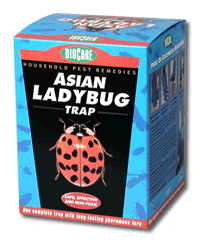
SpringStar has introduced a new solution for controlling indoor Asian Ladybug infestations. Sold under the BioCare brand name, this Asian Ladybug Trap uses the combination of a special-wavelength UV fluorescent light along with a pheromone lure to attract indoor Ladybugs. The fluorescent bulb emits a harmless ultra-violet light frequency that is invisible to humans but highly visible and attractive to Ladybugs. Once drawn by the UV light, Ladybugs are further drawn inside the trap by an insect pheromone. Pheromones are chemicals used by insects and other organisms to communicate. Insects are uncontrollably drawn by the scent of certain pheromones; the pheromone used in the BioCare trap is the aggregating pheromone that motivates Ladybugs to gather together in one place.
Utilizing pheromones to target specific insect pests eliminates the need for broad-spectrum pesticides that may be harmful to people and pets. In fact, the U.S. Environmental Protection Agency has granted most insect pheromones an exemption from pesticide registration because they are not harmful to the environment and present little or no risk to humans.
Once they are drawn to the trap the Ladybugs fall through a funnel and are trapped inside a plastic jar where they can be easily disposed of. There are distinct advantages to capturing Ladybugs alive versus killing them. When ladybugs are stressed or threatened they release their smelly orange substance. Killing them with insecticides, sweeping them up or otherwise handling them may result in orange stains on walls, floors and fabric. Capturing them alive avoids this altogether. In addition, the live captured Ladybugs can be stored in a cool place and released in the garden or greenhouse in the spring.
Ladybugs are adored by children and highly regarded by gardeners for their ability to devour pests like aphids. But like all other insects, they are unwelcome guests in people's homes. By taking the necessary steps and using a little modern ingenuity, homeowners can keep Ladybugs outside where they belong.
|